Physical Address
304 North Cardinal St.
Dorchester Center, MA 02124
Physical Address
304 North Cardinal St.
Dorchester Center, MA 02124

Understanding margin in business is crucial if you’re looking to run a successful operation or even just grasp financial health. Simply put, margin is the difference between your revenue and your costs; it tells you how much profit you’re really making. Ignoring this concept could lead you to miss significant opportunities for growth and efficiency.
Take, for instance, a small coffee shop. If it sells a cup of coffee for $4, but it costs $1 to make, its margin per cup is $3. That straightforward calculation helps the owner understand how many cups they need to sell just to cover their expenses and start making a profit.
Margins can fluctuate based on various factors like pricing, cost control, and market demand. Knowing how to analyze and leverage them can be the difference between thriving and struggling in competitive markets. Understanding your margin isn’t just a number; it’s a tool that shapes decisions, from pricing to inventory management.
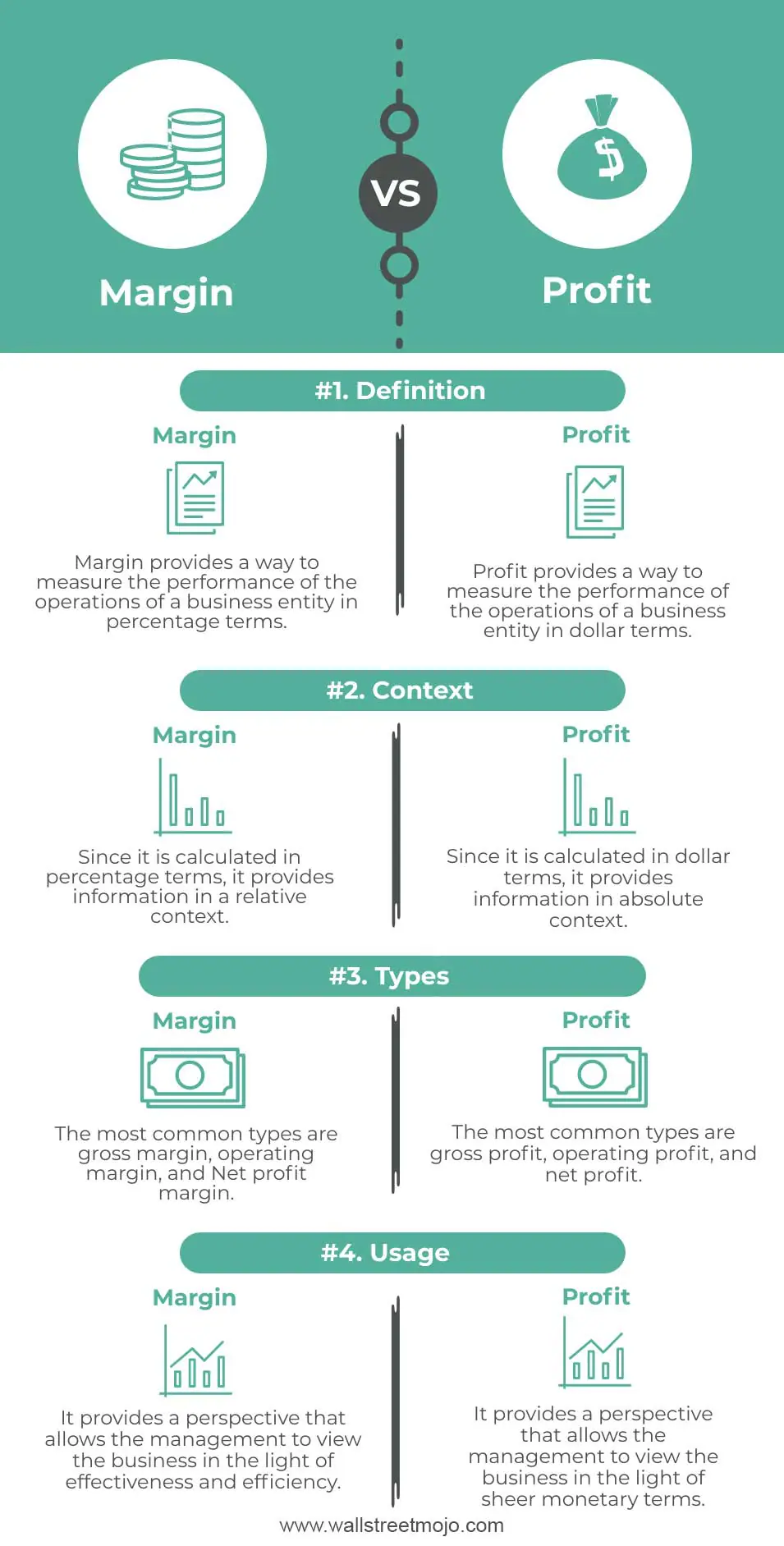
Margin in business refers to the difference between the cost of goods sold (COGS) and the revenue generated from sales. Understanding margin is essential for assessing the profitability and efficiency of a business. Here’s a closer look at the various types of margins and their significance.
| Gross Margin Formula | Description |
|---|---|
| (Revenue – COGS) / Revenue | Represents the percentage of revenue that exceeds the COGS. |
| Operating Margin Formula | Description |
|---|---|
| (Operating Income) / Revenue | Highlights the percentage of revenue remaining after covering operating expenses. |
| Net Profit Margin Formula | Description |
|---|---|
| (Net Profit) / Revenue | Indicates how much profit a company makes for every dollar of revenue. |
For example, suppose a company generates $100,000 in sales and incurs $60,000 in production costs, $20,000 in operating expenses, and $10,000 in taxes. The calculations would be as follows:
Understanding these margins helps businesses evaluate their financial health, pricing strategies, and cost management. It offers insights into where improvements can be made to enhance profitability. For a deeper understanding of how businesses operate, check out this article.
In retail, a store purchases a product for $50 and sells it for $100. The margin is $50, representing a 50% margin. This allows retailers to cover operational costs while generating profit.
Why this matters: Highlighting the significance of understanding margins helps retailers evaluate pricing strategies against competitors while ensuring profitability.
A consulting firm charges clients $200 per hour for its services, while the actual cost is $100 per hour when accounting for employee salaries and overheads. The margin of $100 per hour allows the firm to reinvest in resources.
Why this matters: Stating the importance of margins in the service industry illustrates how firms can support growth and sustain operations with sufficient markup on services provided.
A manufacturer produces a widget for $30, including materials and labor, and sells it for $50. The $20 margin not only reflects profit but also factors in future investments for enhanced production capacity.
Why this matters: Providing insights into manufacturing margins emphasizes how they drive strategic decisions regarding production and pricing, contributing to overall competitiveness.
Companies report gross margin in financial statements, indicating the percentage of revenue remaining after covering production costs. A gross margin of 40% signifies financial health and business viability.
Why this matters: Asking stakeholders to understand the role of gross margin in financial reports helps assess a company’s profitability, efficiency, and market position.
Investors analyze a company’s margin ratios—such as gross margin and net margin—to assess profitability potential before funding. A steady margin trend often attracts investment for growth initiatives.
Why this matters: By keeping track of marginal performance, investors can make informed decisions that align with their risk appetite and return expectations.
When launching a new product, a business assesses its production cost of $40 and decides to price it at $80. The margin of $40 establishes a framework for future pricing adjustments based on market feedback.
Why this matters: Highlighting the approach to establishing price margins emphasizes adaptability in pricing strategies, allowing businesses to remain relevant in dynamic markets.
During a seasonal sale, a retailer reduces the selling price of an item from $60 to $45, impacting the margin. If the cost remains $30, the new margin is $15, which necessitates careful planning to maintain profitability.
Why this matters: Providing clarity on how discounts affect margins stresses the importance of maintaining customer interest without sacrificing financial stability.
Margin in business refers to the difference between the cost of producing a product or service and its selling price. It’s crucial because it directly affects profitability; higher margins generally mean a more sustainable business model.
Sure! If a company sells a product for $100 and its cost to produce that product is $60, the margin would be $100 – $60 = $40. To find the margin percentage, you divide $40 by $100, resulting in a 40% margin.
There are several types of margins to consider, including gross margin, operating margin, and net margin. Each serves a distinct purpose, helping businesses analyze different aspects of their profitability and operational efficiency.
Improving margin often involves reducing costs or increasing prices, but it can also come from enhancing operational efficiencies. Constantly assessing expenses and pricing strategies can help identify opportunities for better margins.
Understanding margin in business is crucial for anyone looking to keep their finances healthy and make informed decisions. It’s not just a number on a spreadsheet; it reflects the financial breathing room you have and can influence everything from pricing to growth potential. So, whether you’re adjusting your pricing strategy or evaluating your operational costs, keeping an eye on your margins can make all the difference. If you want to deepen your knowledge about business fundamentals, check out our article on What Is Business With Example To Enhance Your Understanding. Keep exploring, keep learning, and take charge of your financial journey!